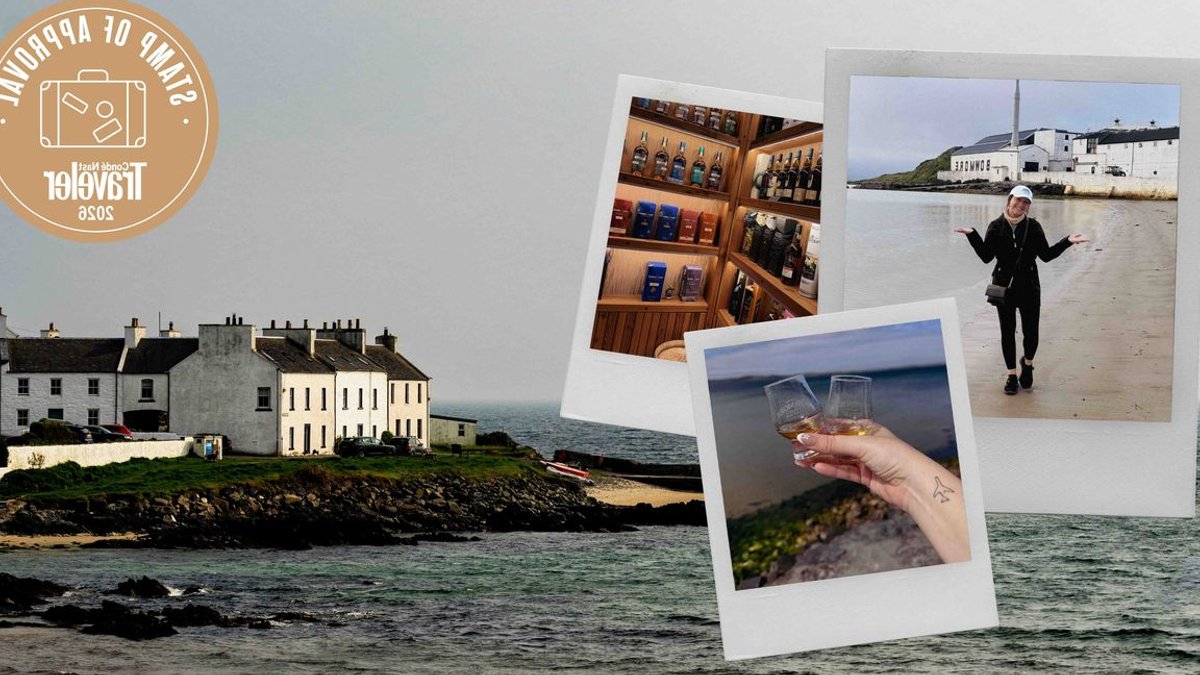
A whisky lover’s dream trip to Islay, Scotland’s smoky whisky island, turned out to be better than expected, according to one traveler who booked a four-day tour through Rabbie’s. The tour, which included transportation, ferry crossings, and visits to multiple distilleries, cost $1,464 all-inclusive—a price that covered three nights in Bowmore and most entry fees, though some tastings required an extra fee.
The journey began in Edinburgh, where a group of 16 travelers boarded a Mercedes mini coach for a scenic drive through the Scottish Lowlands. Their first stop was Falkirk, where the towering Kelpies sculptures provided a striking backdrop before moving on to Oban, known as the “Gateway to the Isles.” There, they sampled whisky at Oban Distillery before boarding a ferry to Islay.
The two-hour sail from Kennacraig to Islay offered a glimpse of the Paps of Jura mountains before the island came into view. At just 240 square miles and home to around 3,000 people, Islay felt remote yet welcoming. The group settled into Bowmore Distillery Cottages, where they shared a communal space with other travelers—an arrangement that turned out to be more comfortable than expected.
The first full day on Islay kicked off with a visit to Bowmore Distillery, where they learned about its 240-year history and enjoyed two tastings—one straight from the cask and another paired with chocolate. The itinerary had originally planned a stop at Kilchoman, but flexibility was key: instead, they visited Ardnahoe and Bunnahabhain, Islay’s most remote distillery, where they sampled four drams with sweeping views of the Firth of Lorne.
Flexibility turns unexpected detours into highlights
Unlike some tours that rigidly follow a schedule, Rabbie’s allowed for spontaneity. Lunches and evenings were free for exploration, giving the group time to bond over shared interests—especially whisky. By the second day, the group had settled into a rhythm, visiting Ardbeg, Lagavulin, and Laphroaig, each with its own distinct character. At Ardbeg, they enjoyed a tasting in the sunshine, while Laphroaig offered an immersive tour of its peat kilns, stills, and warehouses.
Islay’s small size meant some distilleries, like Lagavulin, were closed on weekends, but the guide adjusted the route to include nearby stops, such as Kildalton Church, an eighth-century Christian monument. The flexibility extended to meals—travelers could explore local spots or rely on the tour’s planned breaks. One traveler noted that the group’s shared experiences, from laughing over drams to strolling along the coast, made the trip memorable.
The final day began with an early ferry back to the mainland, where they stopped in Inveraray for lunch and drove through the Arrochar Alps to Luss, a picturesque village. As the trip neared its end, the group reflected on the connections they’d made, strangers who had become friends over shared whisky and stories.
Related Post: AI-Powered Visual Storytelling for Luxury Travel Influencers (2026 Guide)
The tour’s guide, Peter McShane, a Glaswegian with a passion for Scottish folklore, kept the journey engaging with his enthusiasm. One traveler, whose father collects over 200 whiskies, called the experience “well worth the money,” praising the balance of structured visits and unplanned moments that made the trip feel personal.
The tour’s success also depended on its guide, Peter McShane, whose knowledge of Scottish folklore and whisky history kept the journey engaging. His ability to weave local legends, such as tales of selkies, mythical seal-people from Scottish folklore who shed their skins to become human on land, into the itinerary added depth to the experience. Travelers appreciated his enthusiasm, which made even routine stops, like ferry crossings or drives through the Highlands, feel like part of the adventure.
Shared spaces deepen connections beyond whisky tastings
Rabbie’s had structured the tour to allow flexibility, and this proved especially useful on Islay, where weather and distillery closures could disrupt plans. For example, Lagavulin Distillery, one of the island’s most famous, was closed on weekends, forcing the group to adapt. Instead of a guided tour, they spent time at Kildalton Church, a historic site featuring an eighth-century Christian cross and some of Scotland’s earliest carved stones. The detour highlighted how the tour’s design prioritized exploration over rigid schedules, ensuring that even unexpected changes became part of the experience.
One of the tour’s standout features was its communal accommodations at Bowmore Distillery Cottages, where travelers shared a kitchen and living space. This setup supported spontaneous interactions, whether it was comparing whisky notes over dinner or swapping stories about favorite distilleries. The arrangement also reflected Rabbie’s approach to group travel: small enough to feel personal, but structured enough to remove logistical stress. By the trip’s end, the group had formed bonds that extended beyond shared whisky tastes, with some travelers exchanging contact information and looking forward to future meetups. The connections made during the tour hinted at a lasting impact, one that might bring them back to Islay or other Scottish whisky regions in the years to come.
Pricing balances luxury and customization for travelers
Rabbie’s had designed the tour with practicality in mind, handling everything from ferry bookings to accommodation reservations. The $1,464 all-inclusive price covered three nights in Bowmore, most entry fees, and transportation, though additional costs applied to premium tastings or distillery tours. The base price of $609 per adult (excluding accommodations and distillery visits) reflected the tour’s focus on accessibility, allowing travelers to customize their experience based on budget.
The tour’s itinerary also included a stop at Oban Distillery, where travelers sampled whiskies known for their floral and citrus notes before boarding the ferry to Islay. The distillery’s coastal location and modern facilities provided a preview of the island’s whisky culture, reinforcing the theme of Scotland’s varied whisky traditions. Even the ferry ride itself became part of the journey, with passengers enjoying views of the Paps of Jura mountains and the Firth of Lorne, two of Scotland’s most striking natural landmarks.
For travelers like the writer, whose father collects over 200 whiskies, the trip offered a mix of education and indulgence. The balance between structured visits and free time allowed for both learning, such as understanding the differences between Bowmore’s smooth, malty profile and Laphroaig’s intensely peaty character, and relaxation. The group’s shared experiences, from laughing over drams to strolling along Islay’s rugged coastline, created memories that extended beyond the whisky itself. By the final evening, the trip had fulfilled its promise: a seamless blend of adventure, culture, and, of course, whisky.


