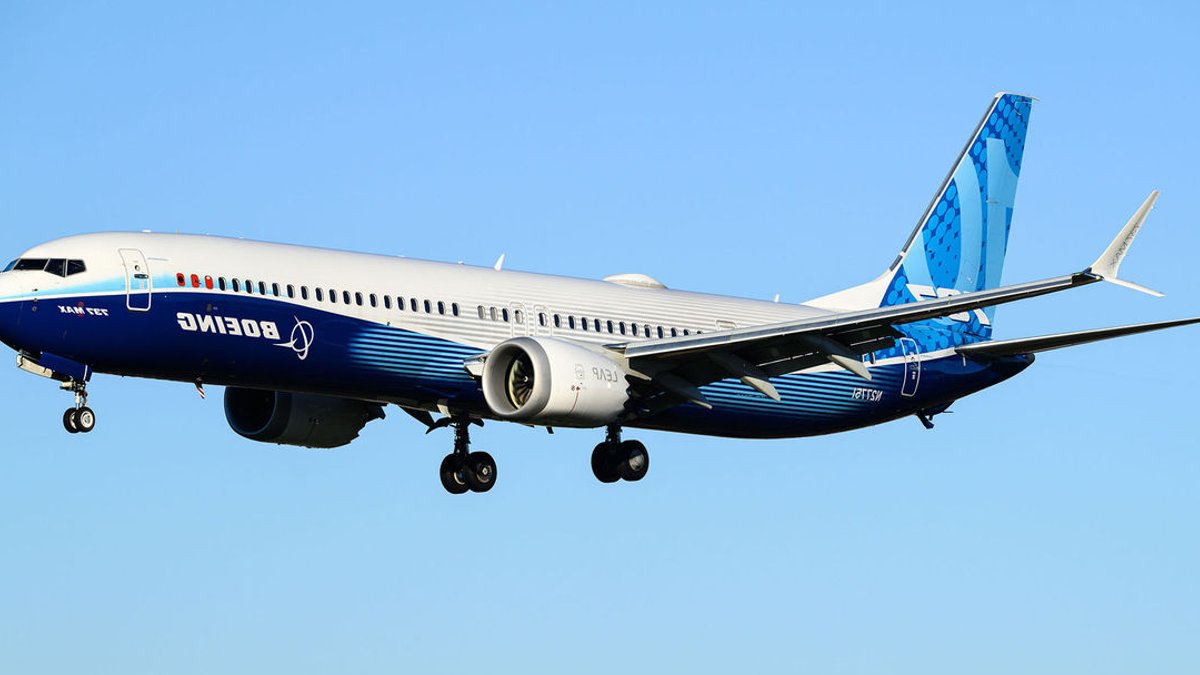
The Federal Aviation Administration announced Tuesday that Boeing’s 737 Max 10 has been approved for passenger service, marking a significant step in the company’s efforts to recover from years of safety and production challenges. The certification allows the aircraft to be sold to both domestic and international carriers, following extensive safety reviews and thousands of hours of test flights.
FAA Certification Process
Transportation Secretary Sean Duffy called the approval “a major win for American manufacturing and our nation’s status as a global aviation powerhouse.” The certification means the FAA has determined the Max 10’s design meets safety standards after engineering reviews and flight testing. However, Boeing must still demonstrate consistent production quality, with each plane requiring individual clearance before passenger flights.
The Max 10 is the largest variant of Boeing’s bestselling narrow-body family, seating 185-210 passengers compared to 175-195 for the Max 9 and 160-180 for the Max 8. The single-aisle jet, introduced at the 2017 Paris air show, was designed to help Boeing compete with Airbus’s A321neo. Technical and regulatory hurdles repeatedly delayed certification, pushing first delivery expectations from 2023 to 2027.
Boeing’s Challenges and Delays
The certification completes Boeing’s four-model 737 Max lineup, following the FAA’s August approval of the smaller Max 7. More than 30 customers worldwide have ordered 1,555 Max 10s, representing over 30% of Boeing’s total 737 Max backlog. Major orders include United Airlines, Delta Air Lines, American Airlines, and Ryanair, with Alaska Airlines adding 105 planes with options for 35 more in January.
Boeing’s struggles intensified after two fatal Max 8 crashes in 2018 and 2019 killed 346 people. A separate incident in 2024 saw a panel fly off an Alaska Airlines Max 9 midair, reigniting scrutiny of the company’s manufacturing and safety practices. These events prompted the FAA to overhaul its aircraft certification processes, though the agency has gradually eased restrictions over the past 18 months, increasing production limits and allowing Boeing to reassert responsibility for airworthiness certificates on completed aircraft.
Market Competition with Airbus
The Max 10 enters a competitive market where Airbus’s A321neo, introduced in 2017, offers greater passenger capacity and range. However, Boeing designed the Max 10 to burn less fuel than older aircraft while carrying more passengers—a combination that appeals to airlines facing high jet fuel costs amid geopolitical tensions. The actual impact on ticket prices will depend on how carriers deploy the planes and the level of competition they face on popular routes.


